

April 6, 2026
B2 Visa Lawyer Navigating Your Visitor Visa Journey with Expert Help
B2 Visa Lawyer Navigating Your Visitor Visa Journey with Expert Help
Why Hiring a B2 Visa Lawyer Can Make or Break Your U.S. Visit
A b2 visa lawyer can be the difference between a smooth entry into the United States and a stressful denial that affects your travel plans for years to come.
Here’s what a B2 visa lawyer helps you with:
-
Application preparation - Completing the DS-160 form correctly and gathering the right supporting documents
-
Proving temporary intent - Building a strong case that you plan to return home after your visit
-
Interview coaching - Preparing you to confidently answer consular officer questions
-
Extensions - Filing Form I-539 before your authorized stay expires
-
Denials and waivers - Navigating refusals, inadmissibility grounds, and INA § 212(d)(3) waivers
-
Complex cases - Prior immigration violations, medical treatment visits, or previous deportations
The B-2 visa is a non-immigrant visa for people visiting the U.S. temporarily for pleasure. That includes tourism, family visits, medical treatment, amateur sports events, and social occasions.
It sounds straightforward. But it isn’t.
Every B-2 applicant is presumed to be an intending immigrant under U.S. law. That means the burden falls on you to prove otherwise — with the right documents, the right story, and the right presentation.
One missing document, one vague answer at the consulate, or one late filing can result in a denial, an overstay, or worse — being barred from future entry.
That’s exactly where expert legal help matters most.
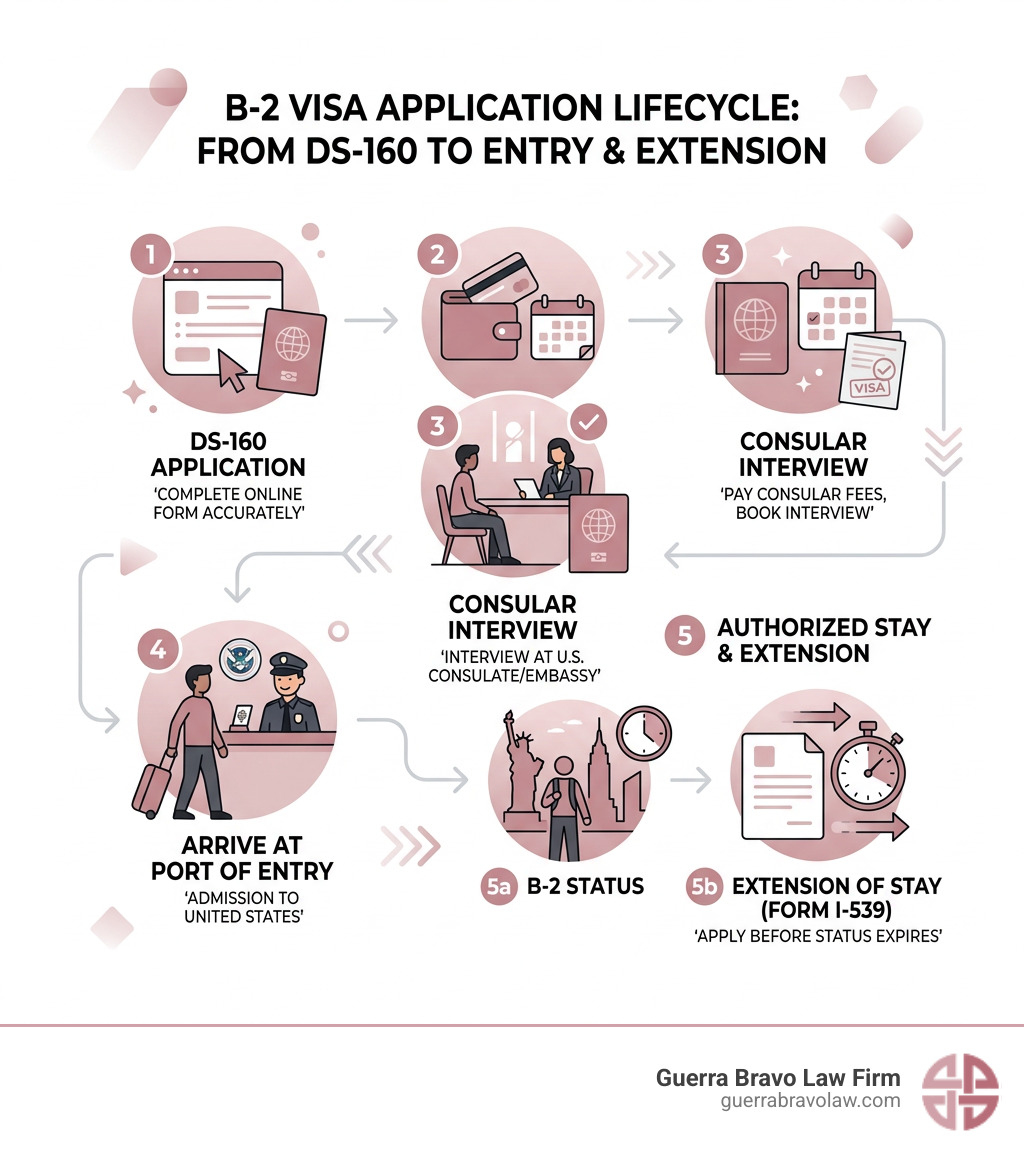
Understanding the B-2 Visitor Visa and Eligibility Requirements
The B-2 visa is the primary gateway for foreign nationals wishing to explore the United States for leisure. While many people refer to it simply as a “tourist visa,” its scope is much broader. At Guerra Bravo Law Firm, we help clients navigate the specific legal definitions that the U.S. Department of State uses to classify “pleasure” visits.
Permitted B-2 Activities:
-
Tourism and Vacation: Visiting national parks, landmarks, or cities.
-
Family and Friends: Visiting relatives or loved ones residing in the U.S.
-
Medical Treatment: Seeking specialized care from American doctors or hospitals.
-
Social Events: Attending weddings, reunions, or ceremonies hosted by fraternal or social organizations.
-
Amateur Events: Participating in musical, sports, or similar events, provided you are not being paid.
To qualify, you must overcome the legal presumption that you intend to stay in the U.S. permanently. This requires demonstrating two critical things: strong ties to your home country and financial self-sufficiency.
Learn more about B-2 Visas and our services to see how we can help you build a compelling case.
Distinguishing Between B-1 Business and B-2 Tourist Visas
It is common for the U.S. government to issue a combined “B-1/B-2” visa, but the activities allowed under each category are distinct. If you are coming for business negotiations, professional conferences, or to settle an estate, you are technically using B-1 status.
However, if your primary goal is a vacation or a medical necessity, you are under B-2 status. Misrepresenting your intent—such as saying you are coming for a vacation when you actually intend to negotiate a major business contract—can lead to accusations of fraud. Working with a Visitor Visa Lawyer ensures your application accurately reflects your true purpose for travel.
B-2 Visa vs. the Visa Waiver Program (VWP)
Many travelers from participating countries (like those in the European Union, Chile, or South Korea) can enter the U.S. via the Visa Waiver Program using an ESTA authorization. While convenient, the VWP has significant drawbacks compared to a B-2 visa:
-
90-Day Limit: VWP stays are strictly limited to 90 days, whereas B-2 visitors are typically granted 180 days.
-
No Extensions: You cannot extend a VWP stay. If your plans change, you must leave.
-
No Status Changes: You generally cannot change from VWP to another visa (like a student or work visa) while inside the U.S.
-
Limited Rights: By using the VWP, you waive your right to contest a removal order (deportation) unless you are seeking asylum.
For those in the Rio Grande Valley or McAllen area looking to bring family members for longer stays, a B-2 visa is often the more secure and flexible choice.